
In today’s high-pressure, fast-moving world, stress and anxiety are no longer occasional challenges—they are persistent companions for many. Emerging research in neuromodulation is now shedding light on a promising, non-pharmacological approach to support emotional regulation and cognitive performance: targeted stimulation of the median nerve at the PC6 acupoint.
PC6 Stimulation: Where Neuroscience Meets Cognitive and Emotional Regulation
Recent clinical evidence highlights the PC6 acupoint—located along the median nerve—as a strategic gateway for influencing the autonomic nervous system. By delivering low-frequency electrical pulses to this region, researchers have demonstrated measurable effects on emotional processing, physiological balance, and behavioral performance.
A study published in Frontiers in Psychology investigated the effects of transcutaneous electrical acupoint stimulation (TEAS) at PC6 in individuals exposed to a controlled fear-inducing environment. In this randomized experiment, 40 healthy male participants with moderate acrophobia were immersed in a 250-meter virtual reality height scenario while performing cognitive tasks. Participants who received low-frequency stimulation at PC6 showed:
- Reduced subjective fear levels, indicating short-term emotional relief
- Faster reaction times and increased task engagement, reflecting improved focus and reduced avoidance behavior
Meanwhile, a trend toward increased heart rate variability (HRV) was observed, suggesting potential modulation of autonomic activity, although these changes did not reach statistical significance (p > 0.05). These findings point to PC6 as a functional neuromodulation site capable of influencing both emotional and cognitive domains in real time.
Supporting Evidence from Cardiovascular Research
Complementing these findings, a randomized clinical trial conducted by researchers in Brazil explored the physiological mechanisms underlying PC6 stimulation. By applying low-frequency transcutaneous electrical stimulation to PC5 and PC6 in healthy subjects, the study observed:
- A shift in sympathovagal balance, indicating modulation of autonomic nervous system activity
- A mild increase in heart rate and cardiac workload, interpreted as a natural adaptive response to external stimulation
Importantly, these changes occurred without inducing oxidative stress, supporting the safety profile of this intervention.
Together, these studies reinforce the concept of PC6 as a “mind-body regulatory hub”—a point where targeted stimulation can influence both emotional states and physiological resilience.
From Clinical Insight to Everyday Application: Introducing eCoffee
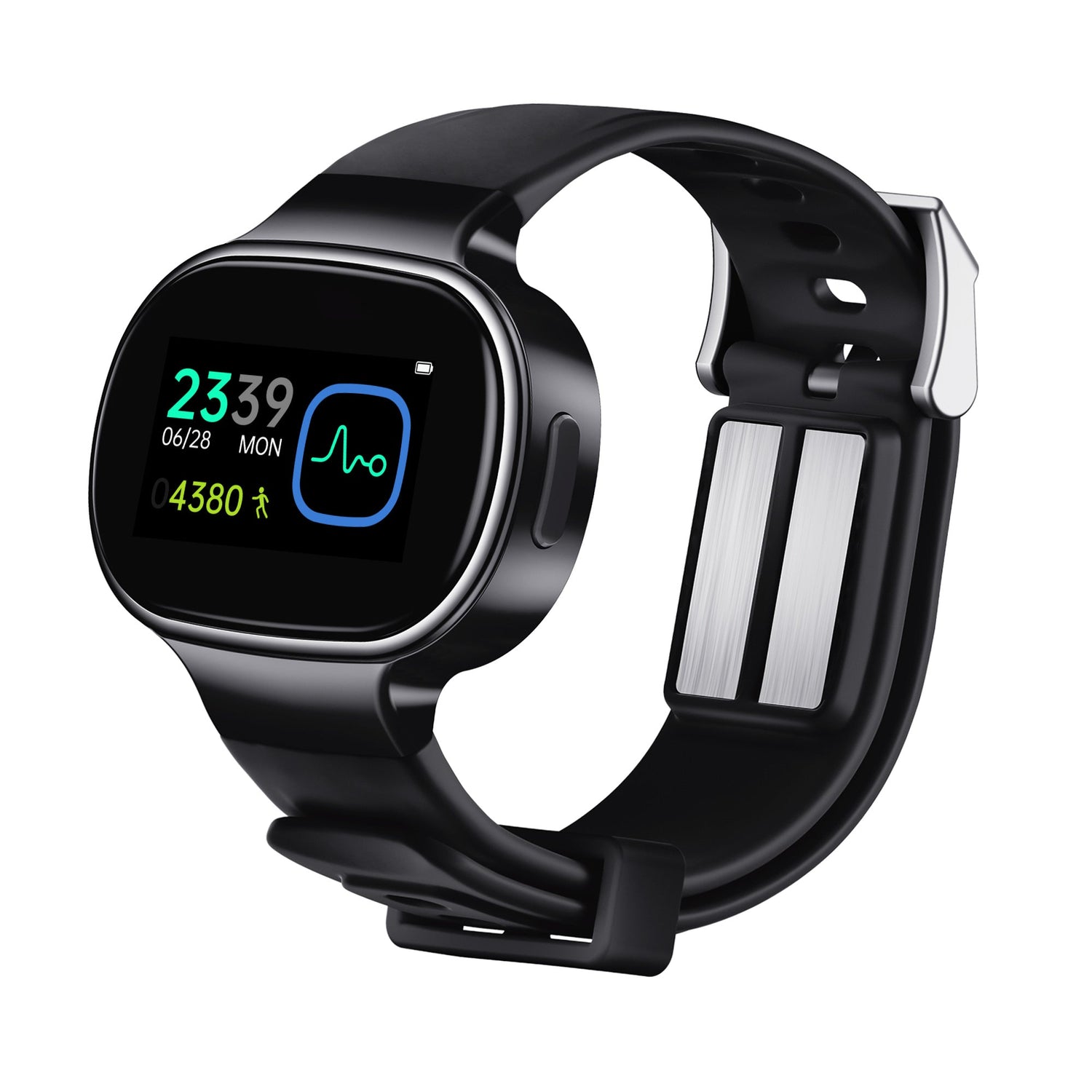
Translating these scientific insights into practical solutions, eCoffee is designed as a wearable neuromodulation device that delivers gentle, continuous, and precise low-frequency electrical pulses to the PC6 region. Built on the foundation of evidence-based research, eCoffee offers users a convenient, non-invasive tool to support mental clarity and emotional balance in real-world scenarios.
Whether preparing for a high-stakes presentation, navigating exam pressure, engaging in competitive sports, or facing physically and mentally demanding situations such as public speaking or height exposure, eCoffee may help:
- Alleviate short-term anxiety
- Enhance concentration
- Improve reaction speed and task performance
By integrating advanced neuromodulation technology into a lightweight, wearable form, WAT Medical aims to empower individuals to better manage their physiological and psychological states—anytime, anywhere.
As research into PC6 neuromodulation continues to evolve, growing evidence supports its role in modulating both autonomic function and cognitive performance under controlled conditions. Notably, the design principles behind eCoffee—targeting low-frequency stimulation at the PC6 region—are closely aligned with the methodologies and findings reported in current clinical literature.
At the same time, the broader potential of PC6-based TEAS remains far from fully explored. WAT Medical welcomes continued collaboration with researchers and clinical partners to further investigate its mechanisms and expand its applications across diverse physiological and cognitive domains.
References
1. Cong, L., Yu, X., Huang, M., et al. (2024). Enhancing emotion regulation: Investigating the efficacy of transcutaneous electrical acupoint stimulation at PC6 in reducing fear of heights. Frontiers in Psychology, 15, 1371014. https://doi.org/10.3389/fpsyg.2024.1371014
2. De Jesus, F. G., Duque, A. P., Massolar, C. S., et al. (2021). Transcutaneous electrical nerve stimulation of PC5 and PC6 acupoints increases sympathovagal balance but not oxidative stress in healthy subjects: A randomized clinical trial. Journal of Acupuncture and Meridian Studies, 14(5), 183–192. https://doi.org/10.51507/j.jams.2021.14.5.183