
Tesla’s production Cybercab has officially entered real-world operation, with limited driverless rides now available in Austin, Texas. Designed specifically for autonomous ride-hailing, the two-seat Cybercab has no steering wheel or pedals, marking a significant step toward a future in which passengers no longer need to participate in the driving process.
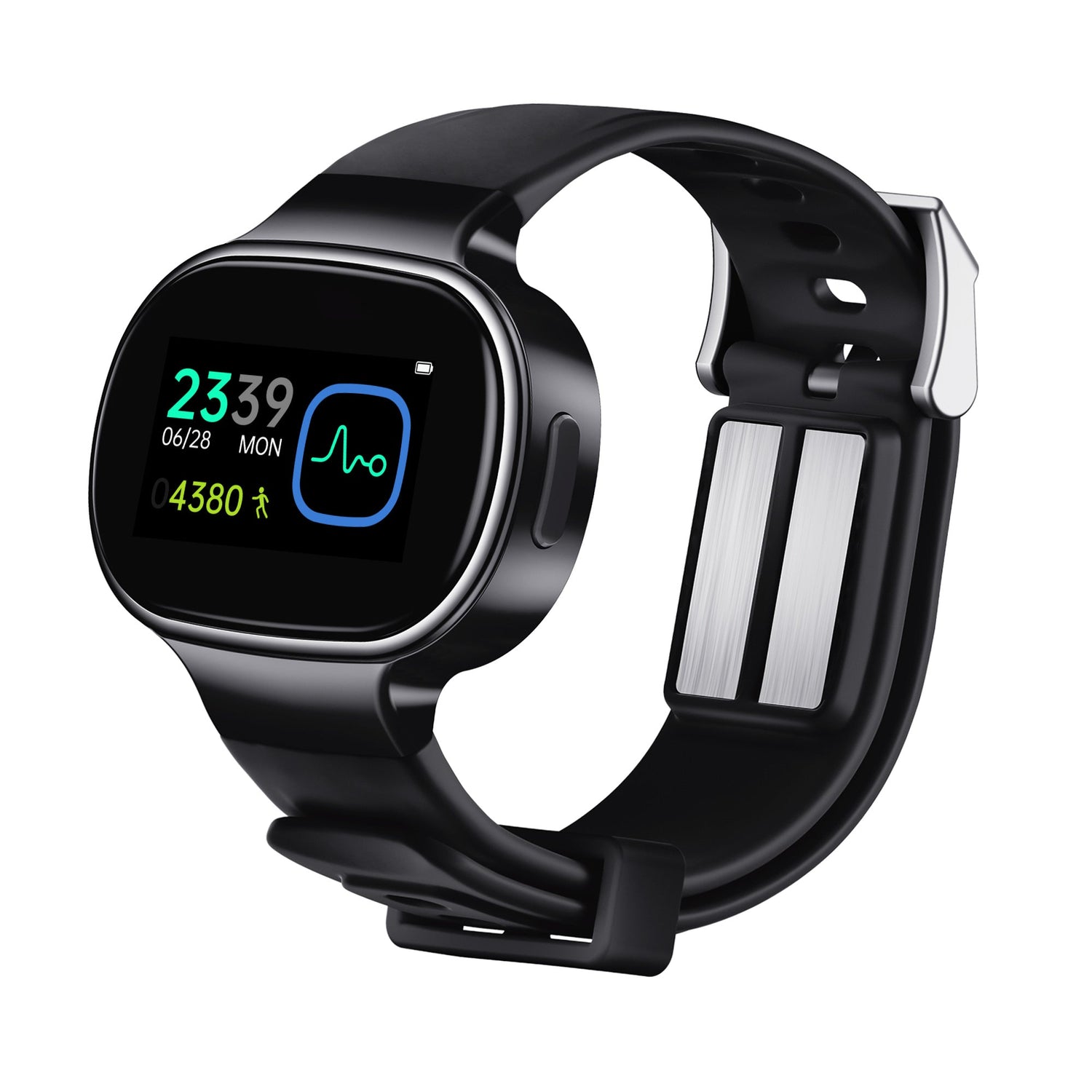
Tesla’s production Cybercab marks a defining moment in the transition toward autonomous transportation, as self-driving vehicles increasingly transform drivers into passengers. But as people gain the freedom to work, read, or use their phones while traveling, motion sickness could become a more prominent challenge for some passengers. This emerging shift highlights the need for effective motion-sickness management in the era of autonomous travel. EmeTerm, an FDA-cleared, drug-free wearable that uses Transcutaneous Electrical Acupoint Stimulation (TEAS) at the PC6 acupoint, offers one potential option for passengers looking to enjoy the freedom of hands-free travel with greater comfort.

From Driver to Passenger: A Different Sensory Experience
Motion sickness occurs when the brain receives conflicting information from the visual, vestibular, and proprioceptive systems. Drivers are generally less susceptible because they actively control the vehicle and can anticipate upcoming acceleration, braking, and turns.
However, passengers in autonomous vehicles lose that predictive control.
Instead of anticipating a turn or braking maneuver, passengers simply experience the vehicle's movement. At the same time, autonomous driving gives passengers more freedom to look away from the road—to read, work, watch videos, or use their phones.
Research into automated vehicles has identified these non-driving activities and reduced awareness of the driving environment as important factors in motion sickness. (Kim S, 2026) A newly published study in Scientific Reports also describes motion sickness as an important challenge to the broader acceptance of autonomous vehicles and examined individual differences in susceptibility during real-world driving.(Lan T, 2026)
This does not mean that every passenger in a self-driving car will experience nausea. Rather, autonomous travel may create new circumstances in which motion-sensitive passengers are more likely to notice symptoms.
The Paradox of Autonomous Travel
Ironically, one of the biggest advantages of autonomous vehicles may also contribute to the problem.
Without the need to drive, passengers can use travel time in entirely new ways. They may catch up on emails, read, watch videos, work, play games, or browse their phones, turning the journey into valuable time for productivity or entertainment. However, these activities also mean spending less time looking at the road and more time focusing on nearby screens—potentially creating a greater mismatch between what the eyes see and what the inner ear senses.
As autonomous vehicles become more widespread, motion comfort could therefore become an increasingly important part of the passenger experience—not simply an issue of vehicle safety or convenience.
How Can Passengers Prepare?
Vehicle manufacturers and researchers are already exploring ways to reduce motion sickness through vehicle design, driving behavior, passenger interfaces, and anticipatory cues.
For passengers, using neuromodulation device to alleviate motion sickness might be an ideal solution.
TEAS (Transcutaneous Electrical Acustimulation) technology is a method based on electroacupuncture and transcutaneous electrical nerve stimulation, and it treats diseases by applying current stimulation with percutaneous electrodes to specific acupoints close to or overlapping with the nerves. Using the TEAS device at PC6 position on the inside of the wrist can help relieve nausea and vomiting.
When use TEAS technology to deliver mild electrical stimulation to the PC6 position on the inside of wrist, which is a location traditionally associated with nausea relief, nausea and vomiting would be relieved. Modern neuroscience research suggests that stimulation of this point can modulate neural pathways involved in the vomiting reflex. Specifically, TEAS may help:
• modulate vagal and brainstem pathways involved in nausea signaling
• inhibit neural circuits that trigger the emetic reflex
• stabilize autonomic nervous system activity
By interrupting the transmission of nausea-related signals, TEAS use on the wrist can help reduce or prevent motion-induced discomfort.
EmeTerm -- An FDA-cleared Wearable TEAS Device
EmeTerm is an FDA-cleared wearable device for the treatment of motion sickness. It utilizes advanced TEAS technology, a form of targeted neuromodulation that delivers gentle electrical stimulation to specific nerve pathways. Clinical evidence supports EmeTerm efficacy of reduce nausea and prevent vomiting.
A Real-World Test: EmeTerm in a Tesla Self-Driving Vehicle
The potential of this approach has already been explored in the real world. In an early test of Tesla’s self-driving technology, a content creator tested EmeTerm during an autonomous driving experience in a Tesla equipped with a traditional driver’s seat and controls. With EmeTerm on, the creator was able to fully take their hands off the wheel and comfortably use their phone while the vehicle handled the driving. The experience offered an early glimpse into a new kind of travel—one in which passengers can relax, stay entertained, and make better use of their time without the added concern of motion sickness.

A New Dimension of Mobility
The arrival of vehicles such as Cybercab represents more than a change in automotive technology. It represents a change in the role of the human being inside the vehicle. For more than a century, cars have been designed around the driver. But now, the autonomous vehicle is designed around the passenger.
As that transition continues, the industry will need to consider a broader definition of mobility—one that includes not only getting passengers safely from one place to another, but also helping them remain comfortable throughout the journey.
The future of transportation may be autonomous. The next question is whether it will also be motion-comfortable.
References
1. Tesla starts Cybercab rides in Austin, drawing US safety agency interest | Reuters, https://www.reuters.com/business/autos-transportation/teslas-cybercab-event-set-thursday-with-few-details-2026-09-03/
2. Kim, S., Yang, J., Hong, S.K. et al. (2026) Vestibular time constant and individual susceptibility to motion sickness in real-world driving. Sci Rep 16, 27829 . https://doi.org/10.1038/s41598-026-68887-8
3. Tingting Lan, Rui Fu,et al. (2026) Motion sickness in autonomous driving: Environmental, individual, and time effects, Journal of Transport & Health, Volume 49, https://doi.org/10.1016/j.jth.2026.102287.
4. Zheng D, Ding P, Gong M, et al. (2026). Transcutaneous Electrical Acupoint Stimulation vs Metoclopramide for Moderate to Severe Postoperative Nausea and Vomiting: A Randomized Clinical Trial. JAMA Surg. doi:10.1001/jamasurg.2025.6394
5. Wang, N., et al. (2022) Wearable transcutaneous electrical acupoint stimulation bracelet for prevention of postoperative nausea and vomiting in patients undergoing hysteroscopic surgery: a randomised controlled trial. British Journal of Anaesthesia, 129(4), e85-e87.