
The future of transportation is rapidly shifting toward autonomy. As companies race to develop fully self-driving vehicles, the way people experience travel is expected to change dramatically. While autonomous cars promise safer roads and greater convenience, they may also introduce an unexpected side effect: more people experiencing motion sickness—even former drivers who rarely felt it before.
Tesla’s Vision: Mass Production of Autonomous Vehicles
The conversation about autonomous mobility accelerated after Elon Musk publicly discussed Tesla’s long-term production plans for its robotaxi platform, the Tesla Cybercab. According to Musk, Tesla aims to manufacture autonomous vehicles across multiple factories, with an ambitious production target of at least 2 million Cybercabs per year—and potentially up to 4 million annually once the program scales.
If realized, such numbers would mark a fundamental transformation in transportation. Instead of personally operating vehicles, millions of people could soon rely on autonomous systems to handle navigation, steering, acceleration, and braking.
However, this shift raises an important physiological question: what happens when former drivers become passengers?
Why Autonomous Vehicles May Increase Motion Sickness
Historically, drivers experience motion sickness far less frequently than passengers. This is because drivers actively control the vehicle and anticipate movement, which helps the brain align sensory signals from vision, the inner ear, and body motion.
When a person becomes a passenger instead of a driver, this predictive control disappears. In autonomous vehicles, occupants may:
• Read or look at screens
• Work on laptops
• Use mobile devices
• Face away from the direction of travel
These behaviors can disrupt the brain’s sensory integration system.
Motion sickness is widely believed to arise from sensory conflict—a mismatch between signals from the visual system and the vestibular system in the inner ear. When the eyes perceive limited motion but the body senses acceleration, the brain may interpret the discrepancy as a physiological threat, triggering symptoms such as: nausea, dizziness, cold sweating and vomiting.
Ironically, the more autonomous vehicles free us from driving tasks, the more likely people may experience motion sickness. Even in partially automated vehicles, drivers relying heavily on automation may feel less engaged with vehicle motion, which can increase susceptibility to discomfort.
How TEAS Helps Relieve Motion Sickness
As transportation evolves, solutions that address motion-induced nausea will become increasingly important. One non-drug approach gaining attention is neuromodulation.
TEAS (Transcutaneous Electrical Acustimulation) technology is a method based on electroacupuncture and transcutaneous electrical nerve stimulation, and it treats diseases by applying current stimulation with percutaneous electrodes to specific acupoints close to or overlapping with the nerves. Using the TEAS device at PC6 position on the inside of the wrist can help relieve nausea and vomiting.
When use TEAS technolody to deliver mild electrical stimulation to the PC6 position on the inside of wrist, which is a location traditionally associated with nausea relief, nausea and vomiting would be relieved. Modern neuroscience research suggests that stimulation of this point can modulate neural pathways involved in the vomiting reflex. Specifically, TEAS may help:
• modulate vagal and brainstem pathways involved in nausea signaling
• inhibit neural circuits that trigger the emetic reflex
• stabilize autonomic nervous system activity
By interrupting the transmission of nausea-related signals, TEAS use on the wrist can help reduce or prevent motion-induced discomfort.
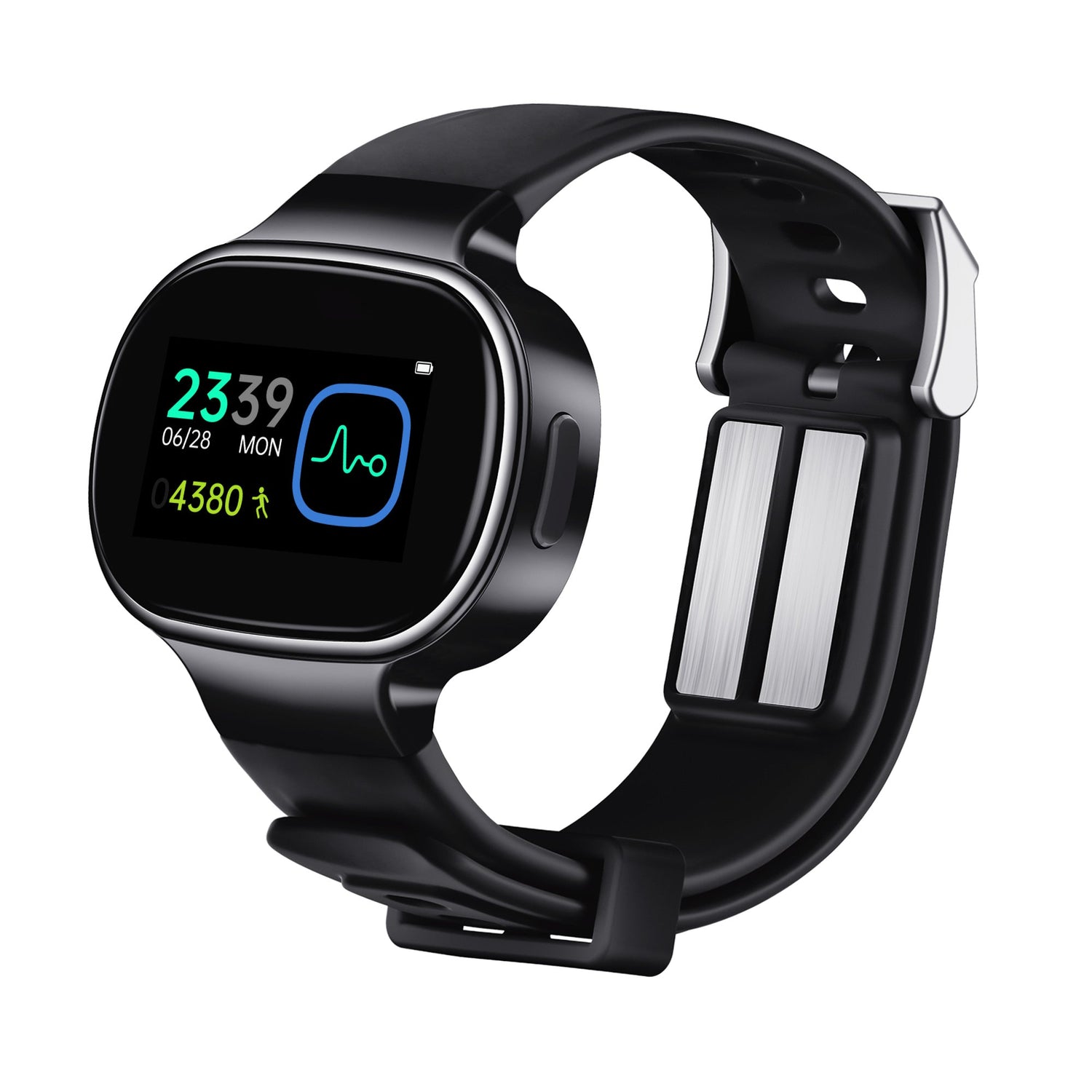
EmeTerm is an FDA-cleared wearable device for the treatment of motion sickness. It utilizes advanced TEAS (Transcutaneous Electrical Acustimulation) technology, a form of targeted neuromodulation that delivers gentle electrical stimulation to specific nerve pathways.
The effectiveness of TEAS has been supported by multiple clinical studies, as well as years of real-world use, demonstrating its ability to reduce nausea and vomiting across various settings.
In addition to its clinical validation, EmeTerm is also eligible for FSA (Flexible Spending Account) and HSA (Health Savings Account) reimbursement in the United States, making it an accessible and cost-effective solution for long-term use.

Beyond Symptom Relief: Enabling a Better Experience of Future Mobility
As autonomous driving reshapes the way we move, the definition of comfort is evolving alongside technology. What was once a simple act of driving is becoming a passive, screen-filled, and highly automated experience—one that may challenge how our bodies adapt to motion. In this context, solutions like EmeTerm are not just about alleviating nausea; they are about removing barriers between people and the benefits of innovation.
By helping users stay comfortable in increasingly automated environments, EmeTerm enables a more seamless interaction with emerging technologies—whether that means working, relaxing, or simply enjoying the journey in a self-driving car.
As mobility becomes smarter and more autonomous, human experience must evolve in parallel. EmeTerm represents a small but meaningful step toward that future: where technology doesn’t just advance efficiency, but enhances how we feel while living in it.
References
1. Tesla plans $20 billion capital spending spree in push beyond human-driven cars | Reuters https://www.reuters.com/business/autos-transportation/tesla-plans-20-billion-capital-spending-spree-push-beyond-human-driven-cars-2026-01-29/?utm.com