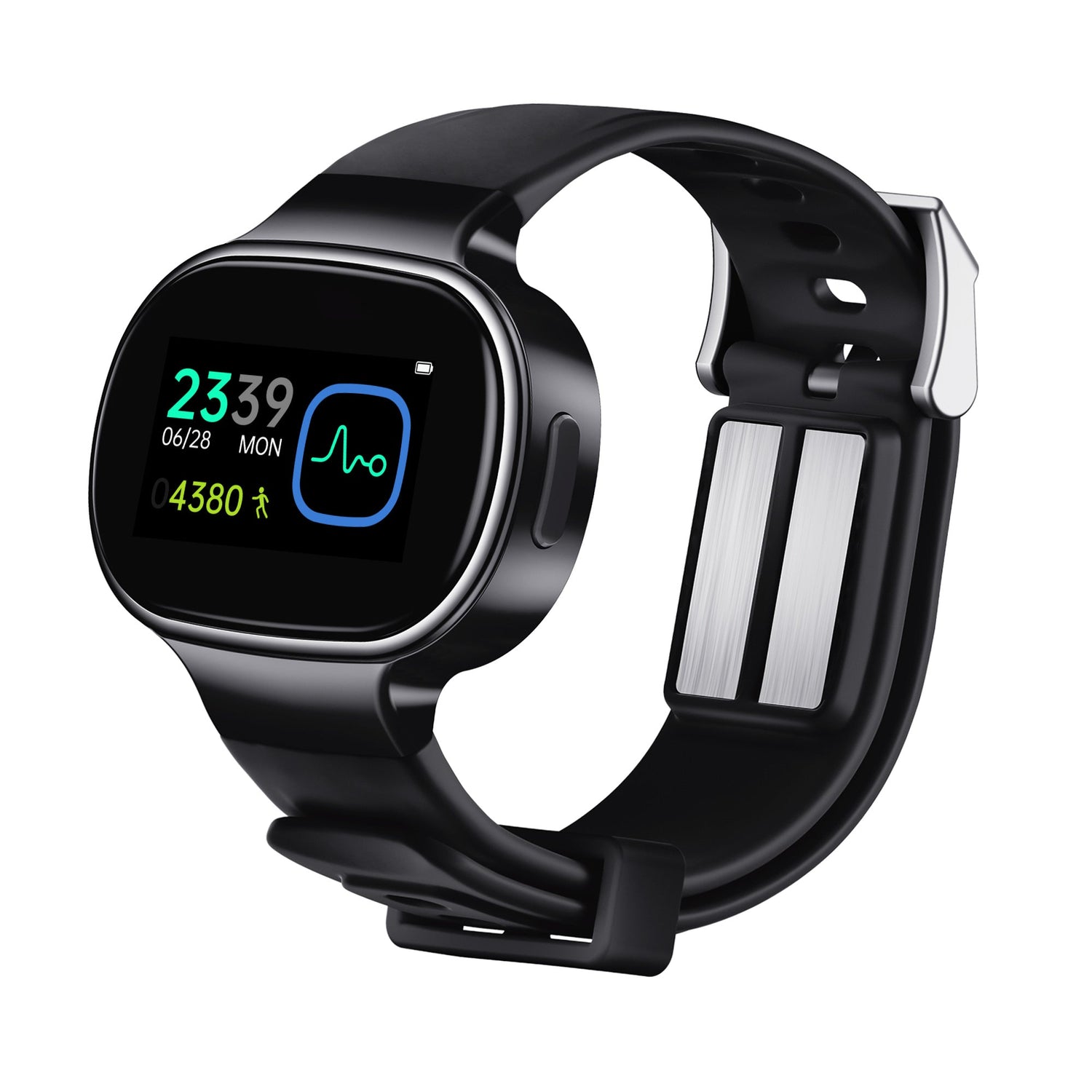

Over the past decade, wearable technology has evolved from simple activity trackers into sophisticated health platforms capable of monitoring heart rate, sleep patterns, exercise load, and recovery indicators.
The Rise of HRV and Personalized Health Awareness
Heart rate variability (HRV) has become an important metric in the wearable health space, offering insights into the interaction between the heart and the autonomic nervous system.
As wearable platforms make HRV tracking more accessible, users can better understand how factors such as sleep, stress, exercise, and lifestyle influence their physiological state.
However, tracking is only the first step.
The next evolution of wearable technology may move from:
Monitoring the body → Supporting the body
From Data Collection to Neuromodulation
For years, wearable technology has focused on collecting and interpreting health data. The next evolution of wearable technology is moving beyond measurement toward interaction.
Neuromodulation explores how targeted, non-invasive stimulation of neural pathways may influence communication between the body and the brain.
By interacting with the nervous system, neuromodulation may complement traditional health tracking — transforming wearables from devices that simply observe the body into technologies designed to support the body’s natural processes.
The Science Behind Wrist-Based Neuromodulation
The human body and brain communicate through a complex network of nerves. Peripheral nerves act as important pathways, transmitting signals between the body and the central nervous system.
Wrist-based neuromodulation uses non-invasive electrical stimulation delivered through the skin to interact with peripheral nerve pathways. By targeting specific areas of the wrist, this technology explores how peripheral signals may influence nervous system activity.
The wrist region has become an area of interest in neuromodulation research because it contains accessible peripheral nerve pathways and acupoint locations that have been investigated in clinical studies. Research on transcutaneous electrical acupoint stimulation (TEAS) at wrist-related acupoints, including PC6 (Neiguan), has explored its potential effects on autonomic nervous system regulation and heart rate variability (HRV).
For example, a randomized clinical trial investigating TEAS stimulation at PC5 and PC6 found that this non-invasive electrical stimulation approach influenced sympathovagal balance, with changes observed in HRV-related measures reflecting autonomic nervous system activity. These findings have contributed to growing interest in wearable applications of wrist-based TEAS technology, where targeted stimulation can be delivered through compact, user-friendly devices.
Building on advances in wrist-based TEAS research, WAT Medical has developed wearable solutions that deliver non-invasive electrical stimulation through the wrist area, targeting the PC6 (Neiguan) acupoint. Through continued clinical research and technology development, WAT Medical is exploring how this approach may support future applications in nervous system regulation and personalized wellness.

Why Nervous System Regulation Matters in Modern Life
Modern lifestyles place continuous demands on attention, energy, and emotional regulation.
- Professionals manage long periods of focused work.
- Students navigate extended learning demands.
- Athletes balance physical training with mental preparation.
- Drivers require sustained alertness during long journeys.
In these situations, maintaining an appropriate state of alertness and focus can be an important part of daily performance.
As interest in nervous system regulation continues to grow, wearable neuromodulation technologies are emerging as a new approach that aims to move beyond passive monitoring toward active interaction with the body.
These technologies may offer new possibilities across daily activities where attention, alertness, and emotional regulation play important roles.
The Future of Personalized Health and Performance
As neuroscience and wearable technology continue to develop, the future of health devices may extend beyond measurement and analysis.
The next generation of wearables may combine physiological monitoring with technologies that interact with the nervous system, moving from simply tracking the body toward supporting its natural adaptive processes.
With wearable neuromodulation solutions such as WAT Medical’s wrist-based TEAS technology, this emerging field is creating new connections between neuroscience, wearable technology, and personalized health.
The future of wearable technology may not only be about knowing more about ourselves — but also about discovering new ways to support the way our bodies naturally adapt.
References
1. Cong, L., Yu, X., Huang, M., Sun, J., Lv, H., Zhang, T., Dang, W., Teng, C., Xiong, K., Ma, J., Hu, W., Wang, J., & Cheng, S. (2024). Enhancing emotion regulation: Investigating the efficacy of transcutaneous electrical acupoint stimulation at PC6 in reducing fear of heights. Frontiers in Psychology, 15, 1371014.
https://doi.org/10.3389/fpsyg.2024.1371014
2. De Jesus, F. G., Duque, A. P., Massolar, C. S., et al. (2021). Transcutaneous electrical nerve stimulation of PC5 and PC6 acupoints increases sympathovagal balance but not oxidative stress in healthy subjects: A randomized clinical trial. Journal of Acupuncture and Meridian Studies, 14(5), 183–192.
https://doi.org/10.51507/j.jams.2021.14.5.183
3. Shaffer, F., & Ginsberg, J. P. (2017). An overview of heart rate variability metrics and norms. Frontiers in Public Health, 5, 258.
https://doi.org/10.3389/fpubh.2017.00258
4. Wu, X., Xie, L., Lei, J. et al. Acute traumatic coma awakening by right median nerve electrical stimulation: a randomised controlled trial. Intensive Care Med 49, 633–644 (2023). https://doi.org/10.1007/s00134-023-07072-1